Description
Ruby Wireless Vibration Sensor: Laboratory Precision in an Industrial Wireless Network
Eliminate unscheduled downtime without expensive cabling infrastructure. Discover the next-generation 3-axis vibration sensor featuring ISA-100.11a communication, 24-bit sampling, and up to 36 months of battery life.
In today’s industrial environment, an unscheduled outage of a critical generator set, process pump, or exhaust fan results in losses amounting to thousands of euros per hour. Traditional, wired continuous Condition Monitoring Systems (CMS) deliver top-tier signal quality; however, the installation costs of cabling, conduits, glands, and junction boxes in hard-to-reach areas often exceed the price of the sensors themselves by 3 to 5 times.
Conversely, most basic wireless IoT sensors on the market offer only compressed Root Mean Square (RMS) values—insufficient for an experienced vibration analyst to identify early-stage faults in rolling element bearings or planetary gearboxes.
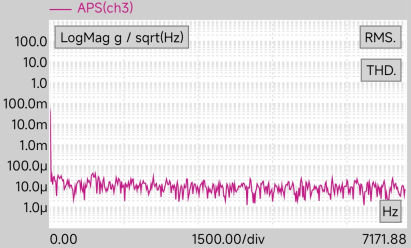
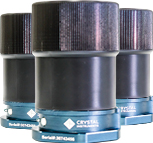
The Ruby wireless measurement system eliminates this compromise. It combines uncompromising, laboratory-grade measurement precision (24-bit ADC, usable bandwidth up to 6.5 kHz, noise floor below 60 µg/√Hz) with the reliability of the industrial ISA-100.11a wireless standard and maintenance-free operation on a single battery for up to 3 years.
Why Is the Ruby System an Optimal Investment for Maintenance & Operations?
1. Up to 80% Reduction in Deployment Costs (Rapid ROI)
By eliminating the need to design and route complex cable paths, system commissioning time on-site is reduced from weeks to just a few hours. Low Total Cost of Ownership (TCO) ensures a rapid Return on Investment (ROI)—often achieved after preventing a single unscheduled breakdown.
2. Industrial-Grade Reliability via ISA-100.11a (IEC 62734)
Unlike consumer-grade Wi-Fi or Bluetooth protocols, the ISA-100 wireless mesh network is specifically engineered for harsh industrial environments. Key advantages include:
-
Electromagnetic Interference (EMI) Immunity: Deterministic time-slot allocation and frequency hopping ensure interference-free transmission.
-
Enterprise Security: AES-128 encryption and FIPS 140-2 compliance safeguard sensitive process data against unauthorized access.
-
Self-Healing Mesh Topology: Every sensor acts as both a measurement node and a network relay, ensuring continuous data flow even in obstructed or structurally dense plant layouts.
3. Advanced On-Board Spectral Analysis (FFT & Demodulation)
Ruby is more than just a data logger—it is a compact, high-performance signal analyzer. Its integrated ARM processor executes edge computing directly on the device:
-
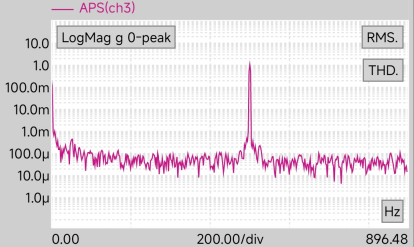
FFT Spectral Analysis: Up to 1,800 spectral lines with block sizes up to 4,096 points.
-
Spectral Demodulation (Envelope Spectrum): Critical for detecting micro-cracks in bearing races and rolling elements at the earliest stages of deterioration.
-
Raw Time-Waveform Recording: 256 MB of non-volatile memory allows storing up to 62 million raw data points for expert post-processing.
4. Ruggedized for Demanding Industrial Environments (IP67)
-
Durability: The IP67-rated enclosure provides complete dust protection and water submersion resistance up to 1 meter.
-
Effortless Power Management: Powered by a standard, commercially available D-size 3.6V lithium battery. Intelligent deep-sleep power management drops current draw to microamps, enabling up to 36 months of operation under standard periodic measurement schedules.
Technical Specifications – Uncompromised Measurement Performance
| Technical Parameter | Specification / Value |
| Measurement Axes |
3-axis (X, Y, Z) |
| Full Acceleration Range |
±25g, ±50g, or ±100g (model dependent) |
| Usable Frequency Bandwidth |
0.5 Hz to 6,500 Hz (Z-axis) | 0.5 Hz to 4,000 Hz (X, Y-axes) |
| Frequency Response Tolerance |
≤ ±1.0 dB (Z-axis across full 0.5 – 6,500 Hz band) |
| Typical Noise Density |
< 60 µg/√Hz (typically < 100 µg/√Hz) |
| Internal A/D Resolution |
24-bit high-linearity ADC (2% amplitude accuracy) |
| Non-Volatile Memory |
256 MB (stores up to 62M raw waveform data points) |
| Communication Protocols |
ISA-100.11a (2.4 GHz Mesh), Bluetooth 5.0, USB-OTG |
| Wireless Encryption |
AES-128 (FIPS 140-2 compliant) |
| Data Sampling Rates |
16 kHz, 8 kHz, 4 kHz, 2 kHz, 1 kHz, 500 Hz, 250 Hz, 125 Hz |
| Power Supply & Battery Life |
Replaceable 3.6V D-cell lithium battery; up to 36 months (periodic mode) |
| Enclosure & Mounting |
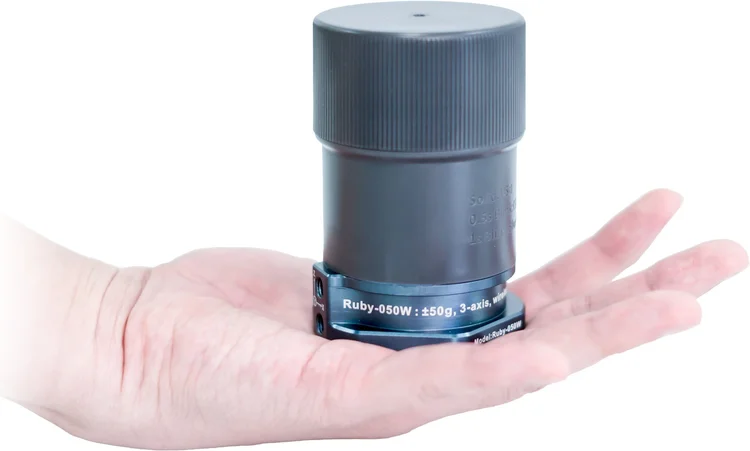
IP67 rated | Weight: 365 g (with battery) | Mounting: 5/16″-24 UNF-2B thread |
Software Ecosystem: End-to-End Diagnostics from Acquisition to AI
The Ruby sensor integrates into Crystal Instruments’ software suite to deliver a seamless diagnostic workflow:
-
RCM (Remote Condition Monitoring): Centralized software for managing ISA-100 wireless sensor networks. Enables remote scheduling, alarm threshold configuration, and automated data acquisition across hundreds of sensors.
-
VDS (Vibration Diagnostic System): Advanced diagnostic software driven by Artificial Intelligence (AI) algorithms. VDS models machines using a library of over 60 standard kinematic components, automatically diagnosing root causes and generating actionable maintenance recommendations.
-
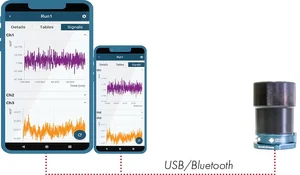
Mobile Application (iOS / Android): Enables engineers to view real-time RMS values, raw time waveforms, and spectra over Bluetooth 5.0 or USB-OTG during physical machinery walkdowns.
Safeguard Your Machinery’s Operational Uptime with Dynamic Research
As an engineering partner and solutions provider, Dynamic Research provides hardware, full integration, and diagnostic expertise—from site surveys and ISA-100 network setup to automated VDS diagnostic rule implementation.
Interested in testing the Ruby system in your facility?
Contact our engineering team for a consultation and project quote